The Role of AI in Supporting Healthcare Professionals’ Continuous Learning
The Evolution of Continuous Learning in Healthcare
In the ever-evolving field of healthcare, continuous learning is crucial for professionals aiming to provide the best patient care. With the rapid advancements in medical knowledge and technology, keeping up-to-date can be challenging. However, Artificial Intelligence (AI) is playing a pivotal role in transforming how healthcare professionals approach continuous learning.

AI-Powered Learning Platforms
AI-powered platforms are revolutionizing medical education by offering personalized learning experiences. These platforms analyze a healthcare professional's learning history, strengths, and areas for improvement to provide tailored educational content. This personalized approach ensures that learners focus on the most relevant and beneficial material.
Moreover, AI can recommend resources, such as articles, videos, and courses, that align with a professional's specific interests and requirements, thereby enhancing the learning experience and outcomes.
Simulation and Virtual Reality
AI-driven simulations and virtual reality (VR) are becoming integral tools for medical training. These technologies allow healthcare professionals to practice procedures and decision-making in a risk-free environment. By simulating real-world scenarios, professionals can hone their skills and gain confidence without the pressures of a live patient interaction.
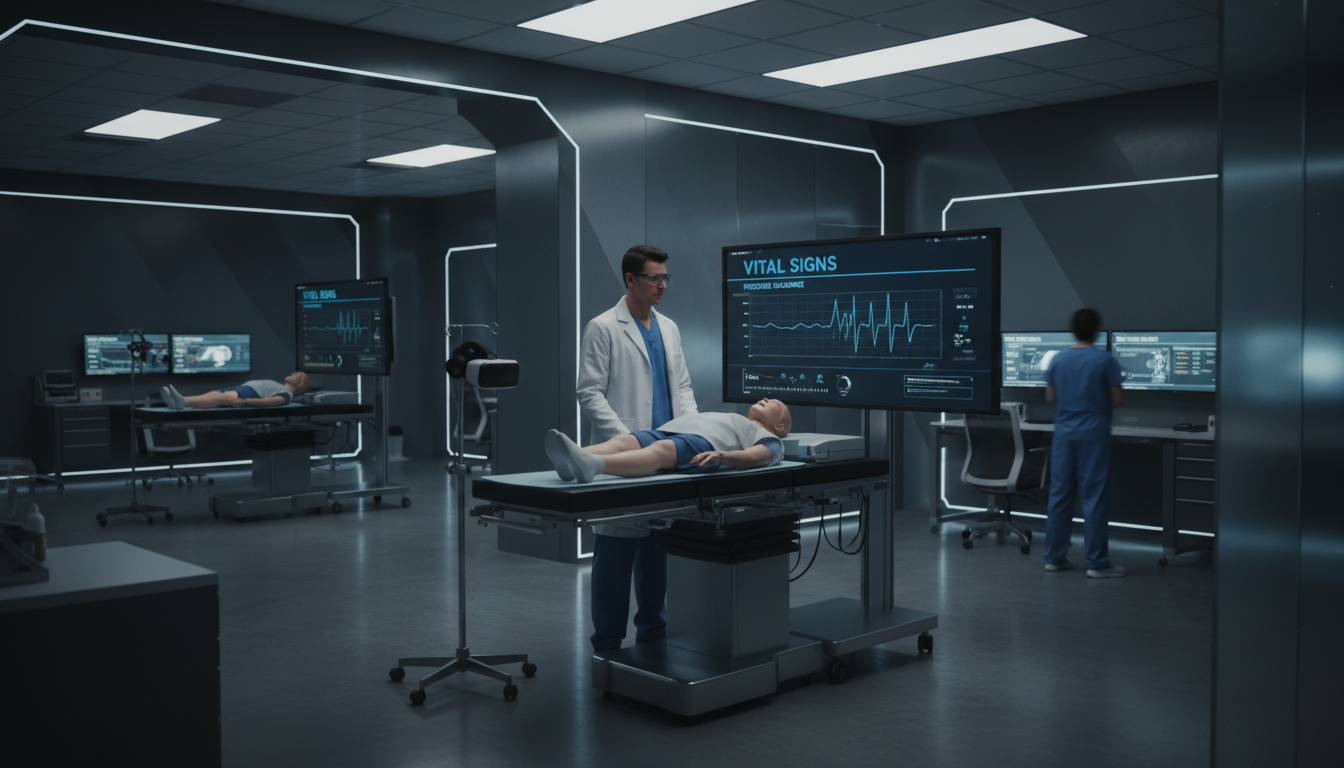
VR and AI simulations offer immediate feedback, helping learners understand their mistakes and improve their techniques. This hands-on approach accelerates the learning process and increases retention.
Enhanced Collaboration and Knowledge Sharing
AI facilitates enhanced collaboration among healthcare professionals by connecting them through digital platforms. These platforms enable the sharing of insights, case studies, and research findings, fostering a global community of continuous learners.
- Discussion forums powered by AI can match professionals with similar interests or questions, promoting targeted knowledge exchange.
- AI can also curate and summarize large volumes of medical literature, making it easier for professionals to stay informed about the latest developments in their field.

Data-Driven Insights for Learning
AI excels at analyzing vast data sets to identify trends and insights that may not be immediately apparent to human learners. In healthcare, AI can track learning progress and outcomes, providing institutions and individuals with data-driven insights into their educational strategies.
This data can be used to refine curricula, identify gaps in knowledge, and ensure that learning objectives are being met effectively. This level of analysis empowers organizations to continuously improve their training programs.
Challenges and Future Directions
While AI offers numerous benefits in supporting continuous learning, it is not without challenges. Concerns about data privacy, the need for infrastructure, and the potential for bias in AI algorithms must be addressed. However, with ongoing research and development, these challenges can be mitigated.
The future of AI in healthcare education looks promising. As technology continues to evolve, AI will likely become an even more integral part of medical training, offering innovative solutions to enhance learning and improve patient care outcomes.